Phuket is growing up: where the island's money is really going
Phuket is booming and cooling at the same time. Which end of the market is moving, and where buyers have the upper hand.
Booming and cooling at the same time
Read the Phuket property headlines for a week and you'll get whiplash. One day it's record luxury sales. The next it's oversupply and unsold stock. Both are true, because Phuket isn't one market any more.
It's a resort market built on foreign money, sitting next to a much smaller local market for Thai families. Inside the resort market, there's another split: the best-located, best-built homes on one side, and a lot of look-alike investment stock on the other. They're moving in completely different directions.
If you're thinking of buying here, which side of that line you're on matters more than any headline.
The top end: where the money is going
Phuket is now Thailand's biggest property market outside Bangkok by value. A 2026 survey by the Agency for Real Estate Affairs counted 90,597 homes on the market worth 705 billion baht. Resort condos and villas make up 52% of the units but about 80% of the value.
The average new home entering the market in 2026 was priced at 12.8 million baht, far above any other province. Almost half of resort villas are priced between 20 and 40 million baht.
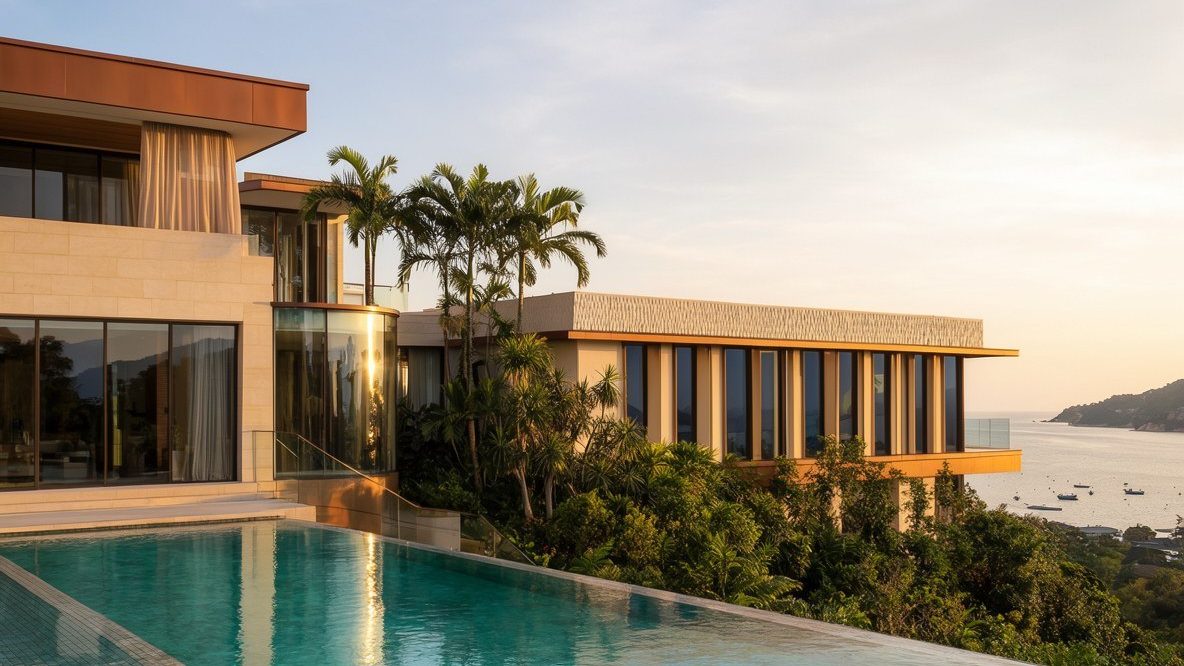
The money is concentrating in a handful of places. Bang Tao, Cherng Talay and Laguna on the west coast are where the big-ticket projects cluster, with schools, restaurants, golf and hotels already in place. Banyan Group says its luxury sales value in Phuket rose 900% year on year to nearly US$50 million. That's the developer's own figure, but it fits the wider pattern.
Foreign buyers are still turning up for condos too. Foreign condo transfers in Phuket rose 18.3% in 2025 to 1,190 units, while they fell nationally. In the first quarter of 2026 they jumped another 52.2% year on year.
The upper-middle: where buyers have the upper hand
Here's what the luxury headlines leave out. After a record 2024, when more than 15,000 new homes were launched, sales in 2025 fell 61% to 5,374 units, according to Krungsri Research. Unsold stock rose a third to 14,008 homes, worth 193.7 billion baht.
And the overhang isn't just cheap studios. Most of the unsold value sits in the upper-middle: the many villas and big condos priced well, but not truly exceptional. Villas are now the slowest-moving part of the market: at 2025's pace it would take around 50 months to sell the villas already on the market, against about 10 months a year earlier.
The pattern is clear once you look at what's selling and what isn't. Homes in the right spots, built by developers with a track record, are still moving. What's struggling is the copy-and-paste stuff: another pool villa in a so-so location, another studio sold on a rental promise. Krungsri expects new launches to dip 4.2% and sales to fall 7.3% in 2026 as developers work through what they've already built.
The local market is a different story again. Condos aimed at Thai buyers are actually the fastest sellers, at about 8.1% of stock a month. But Thai-targeted houses sell at around 3% a month, and rising land prices are squeezing out homes under 3 million baht.
Who's buying Phuket now
The buyer mix is broader than it's ever been. The biggest foreign condo buyers in Phuket in 2025 were Russians, Chinese, French, British and Americans.
Russian and CIS buyers are still the biggest single force, especially for villas in Bang Tao, Cherng Talay, Chalong and Rawai. Chinese, Hong Kong, Singaporean and Taiwanese demand is starting to come back, often from families relocating or with children at school on the island. Western Europeans and Middle Eastern buyers come for retirement homes and big family villas. Indian buyers, digital nomads and tech founders are a growing slice. Thai buyers make up an estimated 15 to 25% of the premium market.
What's changed is why they're buying. Phuket used to be a holiday-home island. It's turning into somewhere people actually live. There are now 19 international schools on the island, and a London Heathrow route is among the new flights planned for 2026.
The visitors keep coming, even in a softer year. Phuket welcomed 5.1 million international visitors in the first half of 2026, down 2.8%, and they spent 240 billion baht, more than a quarter of all foreign tourist spending in Thailand.
What it means if you're buying
This isn't investment advice, but these are the questions I'd want answered before signing anything in Phuket right now.
- Is it in a location people will still want in ten years? The established west-coast areas are holding up. Further out, you're betting on the area maturing.
- Is it different from the ten projects around it? Generic stock is what's sitting unsold. Ask what makes this one the one a future buyer or tenant picks.
- Who's the developer, and what have they finished? In a market this competitive, smaller developers are under real pressure. Krungsri flags rising liquidity risk for them.
- Do the rental numbers stand up without the guarantee? A guaranteed return for the first few years tells you little about the rent after that. Ask what similar finished units actually earn.
- Is there room to negotiate? With villa stock taking years to clear, a buyer with cash and patience is in a stronger position than they were in 2024.
- What does the new city plan allow next door? Phuket's revised plan, expected in 2027, lets some areas build to 15 to 20 storeys. It's worth knowing what could go up in front of your view.
My read
Phuket is growing up, and growing up is messy.
The 2022 to 2024 rush was fuelled by people buying almost anything with a pool and a rental promise. That phase is over, and frankly it needed to end. What's left is a market that rewards the things that always mattered: location, quality, a developer who delivers, and a home someone actually wants to live in.
From where I'm standing, the very top end is the easiest thing to sell right now. The genuinely exceptional homes, with the best plots, the best names and the best finish, are going quickest. The buyers at that level aren't stretching or chasing a yield. They want the best and they can pay for it. The pain is one rung down, in the homes that are priced like the top but aren't quite it. That gap is where the unsold stock is sitting.
The long-term story hasn't changed. Beachfront land isn't getting any more plentiful, land prices have been rising 10 to 15% a year, and the airport, roads and light rail are all on the way. The island is turning from a holiday spot into a place people live, school their kids and run businesses from.
So when someone tells you Phuket is booming, ask which part. When someone tells you it's in trouble, ask the same question. The answer is usually more useful than either headline.
Disclosure and sources
Disclosure: I work in Thai property through Jumanji Properties Co., Ltd. and earn commission when clients buy. Nothing here is legal or investment advice.